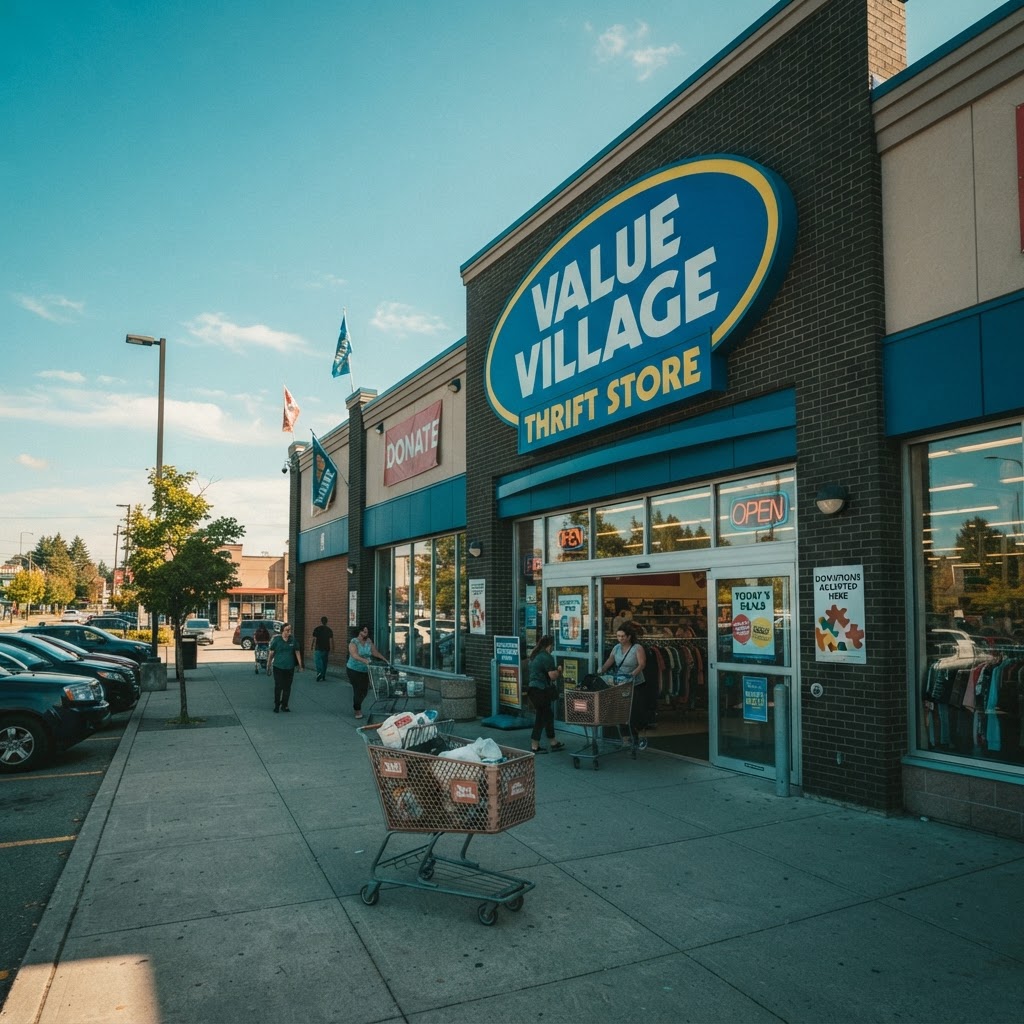
The Value Village Pricing Problem: How the Thrift Giant Lost Its Bargain Soul
From $36 used dish sets to $30 cast iron pans, Value Village shoppers are sounding the alarm on skyrocketing prices. We dive deep into the CBC investigation, court rulings, and thousands of shopper complaints exposing how the thrift giant abandoned its bargain roots.
The Thrift Store That Forgot What "Thrift" Means
If you've walked into a Value Village lately and felt like you needed a second mortgage to afford a used toaster, you're not alone. What was once the holy grail of budget-friendly secondhand shopping has become, in the words of countless frustrated customers, "out to lunch" when it comes to pricing.
From coast to coast, Canadian and American thrifters are sharing sticker-shock stories that would make your grandmother's head spin. A used set of dishes for $36. A cast iron pan for $29.99. Used vinyl blinds — dirty, mind you — for $25. These aren't boutique vintage finds. They're the same donated goods that used to fly off the shelves for a fraction of the price.
So what happened? How did the thrift store that built its brand on affordability become the poster child for secondhand sticker shock? Let's break it down.
The CBC Investigation That Started It All
The mainstream reckoning with Value Village's pricing arguably began when CBC's Marketplace ran an investigation titled "Consumers look to Value Village for a bargain. Many are finding 'ridiculous' markups." The exposé tested real items off the shelves and compared them to their brand-new retail equivalents.
The results were damning. Shoppers found used items priced at or above what the same products cost brand new at stores like Walmart or Canadian Tire. One customer told CBC they found a used kitchen item priced higher than the identical new product on the shelf at a big-box store across the parking lot.
Value Village responded by saying that thousands of items come through each store every week and that staff try to price products accurately. But for the shoppers who've watched prices climb year after year, that explanation rings hollow.
The CBC segment went viral, spawning a TikTok video that racked up views and a wave of social media posts from shoppers sharing their own overpricing horror stories. It wasn't just a few disgruntled customers — it was a movement.
A Judge Called It "Deceiving Consumers"
If the CBC investigation wasn't enough, Value Village also faced a legal reckoning. According to reporting by InvestigateWest, a judge rebuked the company for deceiving consumers through its advertising practices.
"My office received numerous complaints from consumers who feel deceived by Value Village's advertising," the judge noted.
The core issue? Value Village has long marketed itself with a charitable, community-focused image — donation bins, feel-good messaging about giving back, and the implication that your purchases support good causes. But here's the truth that many shoppers don't realize: Value Village is a for-profit corporation. It is not a charity. The donations people drop off in good faith are sorted, priced, and sold for profit.
This isn't inherently illegal, but the gap between the perception ("my donation helps the community") and the reality ("my donation becomes inventory for a billion-dollar company") is what landed Value Village in hot water. The judge's ruling validated what consumer advocates had been saying for years.
The Reddit Uprising: Shoppers Fight Back
If you want to understand the depth of frustration with Value Village, spend five minutes on Reddit. Communities like r/ThriftGrift, r/thrifting, r/toronto, r/Calgary, and r/Lethbridge are overflowing with posts from shoppers who've had enough.
The $36 Dish Set
One post that gained significant traction came from a shopper who found a used set of dishes priced at $36. As they pointed out, charging $5.99 each for used plates meant a stack of six came to $35.94 before tax. That's more than you'd pay for a brand-new set at IKEA or Walmart.
The $30 Cast Iron Pan
A Toronto shopper posted a photo of a cast iron frying pan priced at $29.99. As they noted: "I get it, this is cast iron and is gonna be more expensive than any other frying pan, but this is VALUE VILLAGE — it's definitely not $29.99." A brand-new Lodge cast iron pan retails for around $25-$35.
The Dirty Vinyl Blinds
In Lethbridge, a shopper reported seeing dirty, used vinyl blinds priced at $25. Not cleaned. Not restored. Just... put on the shelf at a price that would make you question whether the pricer had ever actually been to a store before.
Clothes Priced Above Walmart
Multiple commenters across several threads noted that used clothing at Value Village is now regularly priced higher than brand-new clothing at Walmart. One commenter wrote: "A lot of the clothes are more expensive than stuff at Walmart." For a store that positions itself as the affordable option, that's a tough pill to swallow.
The For-Profit Problem: Why Value Village Isn't What You Think
Here's something that might surprise you: Value Village is not a nonprofit. It's not a charity. It's a for-profit, privately held company owned by TVM Capital (formerly Berkshire Partners). The company operates under the name Savers in the United States and Value Village in Canada.
The business model works like this: Value Village partners with local nonprofits, who collect donations. The nonprofit gets paid for the donations they gather, and Value Village gets the inventory to sell at a profit. The nonprofit partnership is real, but the amount they receive is a small fraction of what Value Village earns from reselling those goods.
This isn't a scam — it's a business model. But the marketing blurs the line in a way that many consumers find misleading. When you drop off a bag of clothes at Value Village, you might assume you're donating to charity. In reality, you're donating inventory to a corporation.
This is the core of what the judge's ruling was about: the gap between perception and reality. And it's why so many consumers feel betrayed when they see those same donated goods marked up to near-retail prices.
The 50% Off Day Illusion
One of Value Village's most popular features is its 50% off sale days. These events draw massive crowds and create a frenzy of shopping. But here's the thing: if an item is priced at double what it should be, then 50% off just brings it back to a normal price.
As one Reddit commenter astutely observed: "They are a for-profit company that always prices high and then has their 50% off day which then makes prices seem like a deal." It's a classic retail tactic — inflate the regular price so the sale price looks attractive. The problem is that at Value Village, the "sale" price is often still higher than what the item would cost new elsewhere.
This isn't unique to Value Village — many retailers use this strategy. But it feels particularly egregious at a thrift store, where the goods were donated for free and the expectation is affordability.
The Staff Are Caught in the Middle
It's worth noting that the pricing decisions aren't made by the cashiers and floor staff you interact with. In a revealing Reddit post from someone claiming to work at Value Village (under the Savers name in the U.S.), they shared that staff face daily harassment from customers angry about prices.
"I work here and our staff get harassed for new items everyday! It makes me feel really uncomfortable."
The pricers — the people who actually put the tags on items — are following corporate pricing guidelines. They don't set the strategy. They're often working entry-level jobs and bearing the brunt of customer frustration over decisions made in boardrooms far away.
So if you're upset about a $30 used pan, remember: the cashier didn't price it. Be kind to the staff. Direct your frustration where it belongs — at the corporate policies that created the problem.
The Petition to Stop Donating
The backlash has gone beyond complaints. A growing movement on social media has called for a boycott of donations to Value Village, with some launching petitions urging people to stop donating and shopping until prices come down.
The logic is simple: Value Village's entire inventory comes from donations. If people stop donating, the shelves go empty. If the shelves go empty, the company has to reckon with its pricing strategy. It's a consumer power play — hit them in the supply chain.
Whether this movement gains enough traction to force change remains to be seen. But the fact that it exists at all signals a significant shift in how consumers view the brand.
Where Should Thrifters Go Instead?
If you're fed up with Value Village's prices, you're not without options. Here are some alternatives that still offer genuine bargains:
1. Local Independent Thrift Stores
Small, community-run thrift shops often have the best prices and the most unique finds. They're typically run by volunteers, churches, or local charities, and their overhead is low. Check your neighbourhood for shops you might have walked past a hundred times.
2. Goodwill
While Goodwill has also faced pricing criticism, many shoppers report that Goodwill's prices are still consistently lower than Value Village's. As one commenter noted: "From my experience, the items seem to be on average $3-5 more than Goodwill."
3. Salvation Army Thrift Stores
The Salvation Army operates thrift stores across Canada and the U.S. with generally reasonable prices and a genuine charitable mission.
4. Habitat for Humanity ReStore
If you're looking for furniture, building materials, or home goods, Habitat ReStore offers donated items at a fraction of retail, and the proceeds go toward building affordable housing.
5. Yard Sales and Garage Sales
The original thrift shopping! Use Thrifty Yard to find yard sales near you — where you'll often find the best deals of all, direct from your neighbours. No corporate markups, no middleman. Just people selling their stuff to other people.
The Bigger Picture: What This Means for Thrifting
The Value Village pricing controversy is about more than one store. It's a reflection of a broader trend in the secondhand economy. As thrifting has become mainstream — driven by sustainability concerns, vintage fashion trends, and economic pressures — the corporate players in the space have professionalized and profit-maximized.
The result is a two-tier thrift landscape:
- Corporate thrift (Value Village, Savers, and increasingly Goodwill) with rising prices, professional sorting, and retail-style marketing
- Grassroots thrift (yard sales, church sales, small community shops) that still offer the genuine bargain experience
For budget-conscious shoppers, the shift is frustrating. For resellers and vintage hunters, it's changing the economics of the hunt. And for the donors who fuel the whole system, it's raising questions about where their generosity actually goes.
What Can Shoppers Do?
If you want to push back against thrift store inflation, here are some practical steps:
-
Vote with your wallet. Shop where prices are fair. If Value Village's prices don't work for you, don't shop there. Consumer behavior drives corporate decisions.
-
Donate strategically. If you're bothered by the for-profit model, donate to genuine charities or give directly to people in need through mutual aid networks, Buy Nothing groups, or local shelters.
-
Speak up. Share your experiences — online, with friends, in reviews. The CBC investigation gained traction because people talked about it. Your voice matters.
-
Shop yard sales. Platforms like Thrifty Yard connect you directly with local sellers. No markups, no middlemen, just neighbour-to-neighbour deals.
-
Be kind to workers. The staff at these stores aren't setting the prices. They're working people doing their jobs. Direct your energy at the policies, not the people.
The Bottom Line
Value Village built its brand on the promise of affordable secondhand goods. For years, it delivered on that promise. But somewhere along the way — between the corporate acquisitions, the professionalized pricing strategies, and the for-profit model disguised as charity — it lost the plot.
The CBC investigation, the court ruling, the Reddit uprisings, and the donation boycotts are all symptoms of the same thing: consumers who feel betrayed by a brand they trusted to be affordable.
Will Value Village course-correct? That depends on whether enough consumers demand it. In the meantime, the thrift community is doing what it's always done — adapting, finding alternatives, and sharing the deals (and the rip-offs) with each other.
Because at the end of the day, thrifting was never about a store. It was about the thrill of the hunt, the joy of a good deal, and the community of people who believe that great stuff shouldn't cost a fortune. And that spirit? You can't put a price tag on it.
Have you experienced sticker shock at Value Village or another thrift store? Share your story in the comments, and don't forget to check Thrifty Yard for real yard sale deals near you — no corporate markups required.
Ready to find your own treasure?
Browse active yard sales near you on the interactive map.
Browse yard sales near you