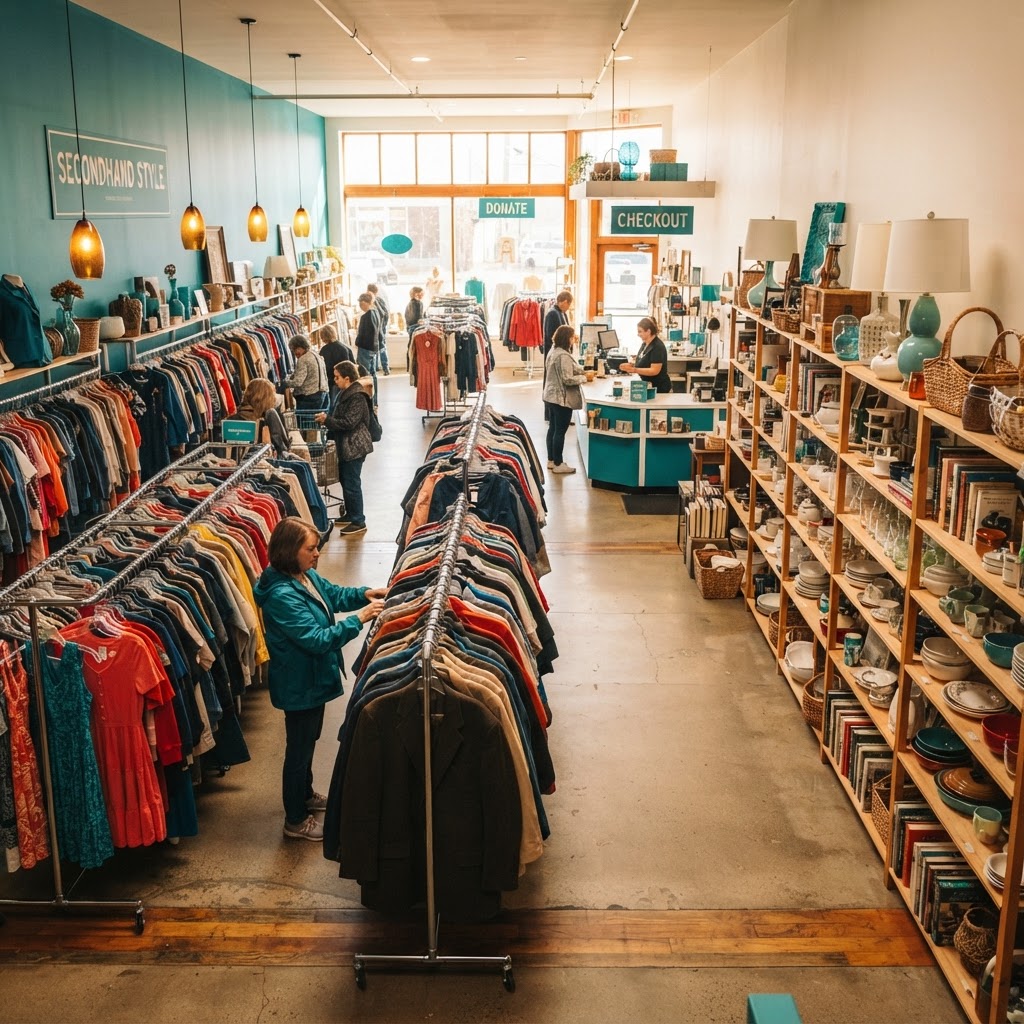
The Repair Revolution: How Canada’s 2026 Circular Economy Incentives Are Transforming Your Thrift Store Hauls
Recent Canadian legislation and a shift toward the 'Right to Repair' have turned every yard sale and thrift store into a treasure trove for restorers and DIY enthusiasts.
The Summer of Restoration: Why Broken is the New Beautiful
Welcome back to Thrifty Yard, your home for all things secondhand in the Great White North! If you’ve stepped into a thrift store or browsed a local yard sale anywhere from Victoria to St. John’s in the last few weeks, you might have noticed a palpable shift in the air. It’s not just the August heat; it’s a full-blown cultural movement.
As of August 2026, the 'thrifting' landscape in Canada has undergone a massive transformation. We are moving away from the 'fast-thrift' era—where people hunted for brand-new tags and pristine fast-fashion—and entering what experts are calling the Repair Revolution. Driven by recent federal incentives and a growing distaste for planned obsolescence, Canadian shoppers are no longer looking for what is perfect. They are looking for what can be saved.
In today’s post, we’re diving deep into how these new trends are changing the way we shop, what you should be looking for at your next garage sale, and how you can save hundreds of dollars by embracing the 'as-is' rack.
The New Canadian 'Circular Economy' Tax Credit
The big news hitting the headlines this August is the full implementation of the Canadian Secondhand Goods Repair Act. For those who missed the memo, this federal initiative allows Canadians to claim a percentage of their repair costs—or tools purchased for restoration—against their annual taxes, provided the items were purchased from a registered thrift store or a verified yard sale.
This is a game-changer for the secondhand market. Suddenly, that mid-century modern chair with the wobbly leg or the vintage 1980s stereo system with a scratchy volume knob isn't just 'junk'—it’s an investment. The government is essentially paying us to keep items out of the landfill, and the thrifting community is responding in a big way.
Why This Matters for Your Wallet
- Lower Purchase Prices: Items labeled 'as-is' or 'parts only' at stores like Value Village or Salvation Army are priced significantly lower than their pristine counterparts.
- Increased Resale Value: With the 'Right to Repair' being a hot topic, restored vintage goods are fetching record prices on platforms like Facebook Marketplace and Kijiji.
- Skill Building: We are seeing a resurgence in 'home economics' skills—sewing, basic electronics, and woodworking—that save money in every aspect of life.
The Rise of the In-Store Repair Café
Perhaps the most exciting trend of 2026 is the emergence of 'Repair Cafés' physically located inside or adjacent to major thrift stores. In cities like Toronto, Calgary, and Montreal, thrift giants are partnering with local makerspaces to provide shoppers with the tools they need the moment they buy an item.
Imagine buying a stunning wool coat with a missing button and a small tear in the lining, then walking ten feet to a communal sewing station where a volunteer helps you fix it on the spot. This isn't a futuristic dream; it’s happening right now in Vancouver's East End and Halifax’s North End. These hubs are turning the act of thrifting from a solitary hunt into a community event. It’s about more than just buying stuff; it’s about the pride of craftsmanship.
Scouting the Yard Sales: What to Look for in 2026
With this 'Repair Revolution' in mind, your strategy at a yard sale needs to evolve. In the past, you might have walked past a pile of tarnished silver or a dusty sewing machine. In 2026, those are your high-value targets.
1. Solid Wood Furniture with 'Good Bones'
Ignore the scratches and the peeling lacquer. In Canada, solid wood is becoming increasingly expensive. Look for dovetail joints and heavy weights. A weekend of sanding and a coat of eco-friendly Canadian-made wax can turn a $10 yard sale find into a $400 heirloom.
2. Vintage Small Appliances
Before the 2000s, appliances were built to be opened and serviced. If you find a vintage Sunbeam mixer or a heavy-duty toaster at a garage sale, don't be afraid if it doesn't hum perfectly. Often, it just needs a internal cleaning or a new $5 fuse—items now covered under the new repair incentives.
3. Natural Fiber Clothing
With the environmental impact of synthetic fabrics becoming a major news story this summer, natural fibers like linen, wool, and silk are the 'gold' of the thrift store. Even if a garment is two sizes too big, the 'Repair Revolution' mindset encourages us to take it to a local tailor or learn to hem it ourselves.
Essential Tools for the Modern Thrifter
If you're going to join the revolution, you need a 'Thrifter’s Toolkit' in your trunk. Based on the trends we're seeing this August, here are the essentials:
- A Multi-Bit Screwdriver: Essential for checking the battery compartments of electronics at yard sales (corrosion is the enemy!).
- The 'Fabric Feel' Guide: A small swatch book to help you identify genuine wool and silk in the dim lighting of a thrift bin.
- A Portable Power Bank: To test any USB-powered electronics you find on the fly.
- Measuring Tape: Because 'eyeballing it' is the number one reason thrifted furniture ends up back on the curb.
The Etiquette of the 'As-Is' Bargain
Negotiation has always been a part of yard sale culture, but in 2026, the conversation has changed. When you point out a flaw in an item, it’s no longer just a tactic to lower the price; it’s a shared acknowledgement of the work required.
When you're at a local community swap or a neighbor's driveway, be honest. 'I love this lamp, but the wiring looks frayed. Since I’ll need to spend $20 on a rewiring kit and an hour of my time, would you take $5 instead of $15?' Most sellers in the current economy are happy to see their items go to a home where they will be restored rather than a bin where they will be destroyed.
Conclusion: A More Sustainable Way to Shop
As we wrap up another incredible summer of thrifting in Canada, it's clear that the 'Repair Revolution' is more than just a passing fad. It’s a response to the economic and environmental pressures of our time. By choosing to shop secondhand and committing to the 'Right to Repair,' we are not only saving money but also preserving the history and soul of the objects we bring into our homes.
So, the next time you’re at your local thrift store and you see something that looks a little 'tired,' don't walk away. Look closer. With a little bit of effort and the community spirit of 2026, that diamond in the rough is waiting for you to make it shine again.
Happy hunting, Canada! Stay thrifty.
Ready to find your own treasure?
Browse active yard sales near you on the interactive map.
Browse yard sales near you