thriftingyard salesecondhandCanadafrugal living
The Great Canadian Curb-Crawl: Why We’re Skipping the Thrift Store for the Sidewalk This Summer
Thrifty Yard TeamAugust 13, 202627 views
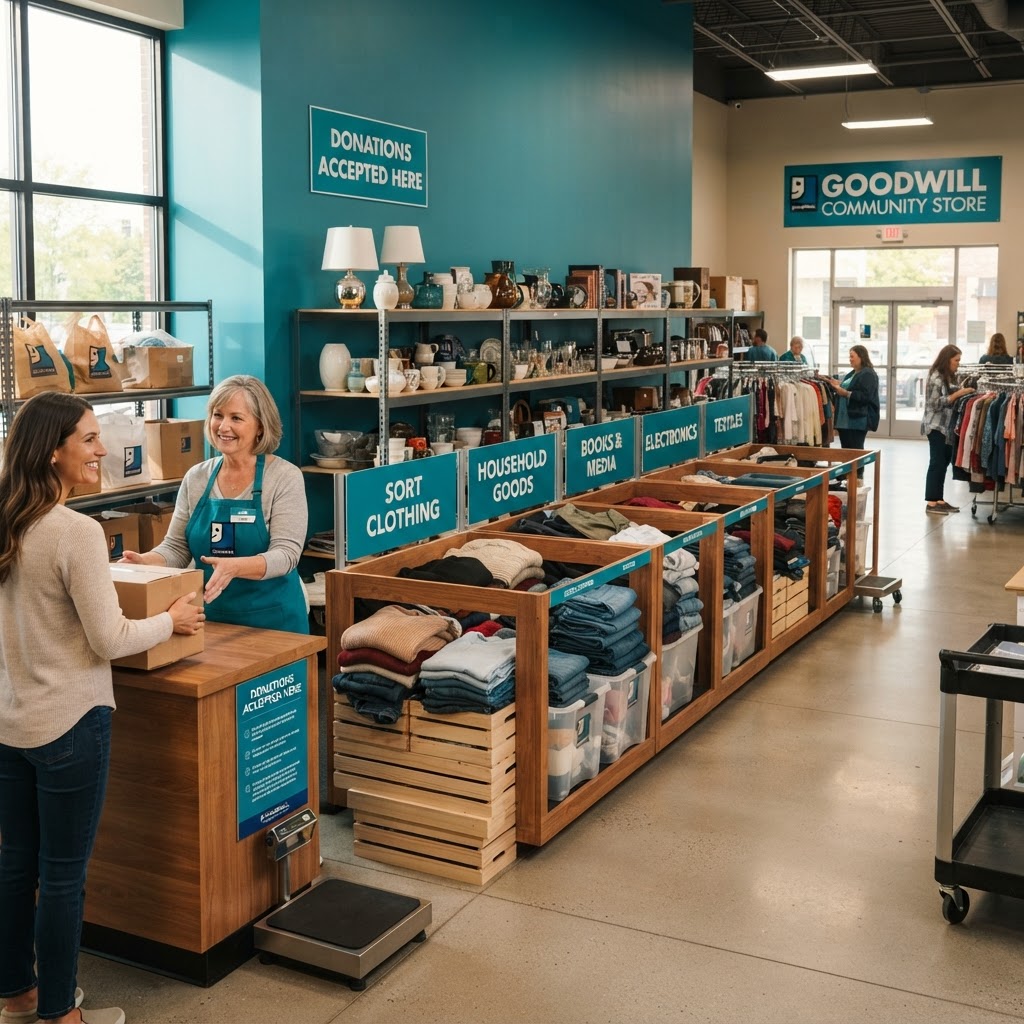
With big-box thrift store prices hitting an all-time high this August, Canadians are turning to a new grassroots movement: the organized Curb-Crawl.
The Shift from Aisles to Sidewalks\n\nWelcome back to the Thrifty Yard blog, where we track the pulse of the Canadian secondhand market! It is August 13, 2026, and if you’ve stepped into a major thrift store lately, you’ve likely felt the "sticker shock." What used to be a $5 vintage find is now being tagged at $25 thanks to AI-driven pricing and the ever-increasing overhead of retail spaces. But Canadians are a resilient bunch. Over the past few weeks, a fascinating new trend has reached a boiling point across the Great White North. From the leafy streets of Halifax to the suburbs of Burnaby, we are witnessing the rise of the “Great Canadian Curb-Crawl.” \n\nInstead of donating to corporate giants, neighbors are coordinating massive, street-wide “free-for-all” weekends. This isn't just a random yard sale—it’s a decentralized, community-driven movement that is redefining how we think about thrifting and secondhand shopping in 2026. We are seeing a fundamental shift in how goods circulate within our neighborhoods, moving away from centralized retail and back toward direct neighbor-to-neighbor exchange.\n\n## Why the "Thrift Fatigue" is Real in 2026\n\nFor decades, the local thrift store was the sanctuary of the frugal. However, the landscape has changed. In early August 2026, several viral social media posts highlighted a growing frustration among Canadian shoppers. When a pre-loved "fast fashion" t-shirt is priced higher than its original retail value, something has to give. This "thrift fatigue" has led to a massive spike in community-led initiatives. \n\nAccording to recent neighborhood data, local "Buy Nothing" groups and community swap meets have seen a 40% increase in participation this summer alone. The message is clear: Canadians want to keep their items within the community, ensuring they go to people who need them rather than sitting on a corporate shelf with a high markup. We are seeing a rejection of the "boutique-ification" of charity shops. People are realizing that the true value of secondhand goods lies in their accessibility, not their potential for high-margin resale by a middleman.\n\n## Anatomy of a Curb-Crawl: What’s Happening Now\n\nLast weekend, cities like Toronto and Montreal saw record-breaking participation in "Curb-Crawl" events. Unlike a traditional yard sale, where the goal is to make a few loonies and toonies, a Curb-Crawl is about radical circularity. It’s a coordinated effort where entire blocks agree to declutter simultaneously. \n\n### How it works:\n\n* Digital Coordination: Residents use hyper-local apps to pin their location and a photo of what they are putting out on the curb. This allows "crawlers" to plan their route efficiently.\n* The 24-Hour Rule: Items are placed out on a Saturday morning with "FREE" signs. Anything left by Sunday evening is either brought back in or collected by a pre-arranged local charity pickup, ensuring the streets stay clean.\n* The "Thrift-Walk": Instead of driving to a warehouse, shoppers walk their own neighborhoods with wagons and reusable bags, turning thrifting into a social, outdoor community event. It’s common to see neighbors chatting over a free coffee table or helping each other load a "new" armchair into a hatchback.\n\n## 5 Tips for Scoring Big During a Curb-Crawl\n\nIf you're planning to join the next wave of sidewalk hunting, you need a strategy. This isn't your grandma’s garage sale; it’s fast-paced and requires a keen eye. Here is how to master the crawl:\n\n1. The Early Bird Gets the Teak: Most high-value items (like mid-century modern furniture or vintage electronics) are put out at sunrise. If you wait until noon, you’re left with the chipped mugs and stained linens. Serious crawlers are out by 7:00 AM.\n2. Bring a "Rescue Kit": Always carry a small screwdriver, some wet wipes, and a set of hex keys. Sometimes a great piece of furniture is just one loose screw away from being perfect. Being able to disassemble a large item on the spot also makes it easier to transport home.\n3. Map Your Route: Use local community boards to see which streets have the highest density of participants. In Calgary, the “Beltline Crawl” recently featured over 50 homes on a single three-block radius! Focus on older neighborhoods where residents tend to have larger basements and more "hidden" treasures.\n4. Check for Quality, Not Just Price: Since it's free, it’s easy to get over-excited and take everything. Ask yourself: "Would I actually pay money for this?" If the answer is no, leave it for someone who truly needs it. Avoid taking items that are heavily damaged or pose a safety risk, like old helmets or car seats.\n5. Respect the Property: Only take what is clearly marked as free on the curb. Don’t wander up onto porches or into open garages unless invited! The success of these events relies on mutual trust between neighbors.\n\n## The Environmental Impact of Local Thrifting\n\nBeyond saving money, the Curb-Crawl movement is a massive win for the environment. When we shop at a traditional thrift store, there is still a significant carbon footprint involved in the logistics of trucking donations to processing centers, sorting them, and then shipping them back out to retail floors. \n\nBy keeping the secondhand exchange within a two-kilometer radius, we are drastically reducing transport emissions. It’s the ultimate form of "hyper-local" sustainability. Many Canadians are reporting that they feel a much stronger connection to their neighbors when they know the lamp in their living room came from the house three doors down. It turns a transaction into a story, and a piece of waste into a shared community resource. In a world increasingly concerned with climate change, the Curb-Crawl is a practical, tangible way to make a difference.\n\n## What This Means for the Future of Yard Sales\n\nDoes this mean the classic yard sale is dead? Absolutely not! In fact, the Curb-Crawl is acting as a gateway drug for the traditional sale. Many people start by giving things away and realize how much fun the interaction is, leading them to host a more organized, profitable garage sale the following month. \n\nWe’re seeing a hybrid model emerge that maximizes both community benefit and personal profit. For example, a neighborhood might host a "Pro-Picker" Yard Sale on Friday for collectors and resellers, a Community Swap on Saturday for trading goods, and finally, the Curb-Crawl on Sunday to clear out whatever remains for free. This tiered approach ensures that items find their best possible home while minimizing the amount of stuff that ends up in a landfill.\n\n## Conclusion: Get Out There and Crawl!\n\nAs we move through the rest of August 2026, the trend shows no signs of slowing down. Whether you’re a seasoned pro at thrifting or a newcomer looking to furnish your first apartment on a budget, the sidewalk is currently Canada’s best department store. The Curb-Crawl represents a shift in values—from consumption to community, and from profit to participation. \n\nBefore the autumn rains arrive and the snow begins to fly, take a walk through your neighborhood this weekend. You might just find that perfect piece of secondhand treasure waiting for you right on the curb. Stay thrifty, Canada!\n\n***\n\nDid you score something amazing on the curb this week? Tag us on social media using #ThriftyYardCrawl and show off your finds!
Share:
Ready to find your own treasure?
Browse active yard sales near you on the interactive map.
Browse yard sales near you