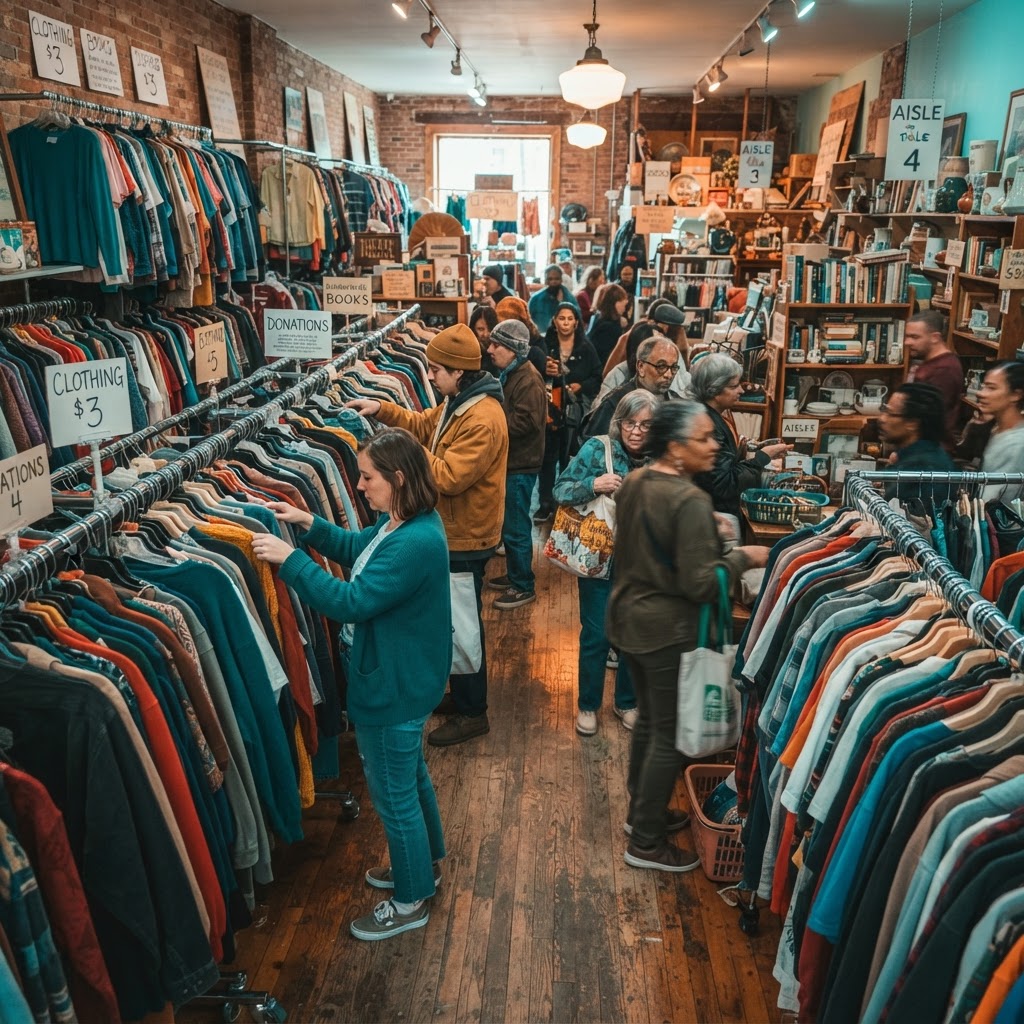
Beyond the Bins: Why Canadians are Trading Thrift Stores for Community Swap Meets in 2026
As traditional thrift store prices soar, a new wave of community-led swap meets is taking over the Canadian secondhand scene—here is how to join the movement.
It is August 3, 2026, and if you have stepped into a major thrift store chain recently, you have likely felt the "sticker shock." What used to be a five-dollar find is now tagged at twenty, and that vintage t-shirt you spotted? It is locked behind a glass case with a price tag that rivals a boutique on Queen Street West.
For many of us at Thrifty Yard, the thrill of the hunt has started to feel a bit more like a chore. But there is a silver lining. In the last few weeks, a massive shift has been happening across Canada. From the rainy streets of Vancouver to the historic neighborhoods of Halifax, thrifters are staging a quiet revolution. We are moving away from the big-box bins and moving toward the community swap meet.
In this post, we are diving deep into why the "Micro-Exchange" is the biggest trend in secondhand shopping this summer and how you can get involved to save money while keeping the circular economy alive.
The Great Thrift Inflation of 2026
Let's address the elephant in the room: the cost of thrifting has skyrocketed. Over the past twelve months, major Canadian thrift retailers have come under fire for what shoppers are calling "predatory pricing." We have seen used fast-fashion brands being sold for more than their original retail price.
Why is this happening? A few factors are at play:
- AI-Driven Pricing: Many large chains have implemented image-recognition software that automatically identifies brands and sets prices based on online resale values (like eBay or Poshmark), ignoring the local community's needs.
- Operating Costs: Increased commercial rents in Canadian urban centers have forced non-profits and for-profits alike to raise their margins.
- The Reseller Boom: With more people flipping items for a living, stores have raised prices to capture some of that potential profit.
This "Great Thrift Inflation" has left the average Canadian family—the people who actually rely on secondhand goods for affordability—out in the cold. The result? A grassroots movement toward community-hosted events.
The Rise of the "Micro-Exchange"
A "Micro-Exchange" or a community swap meet is essentially a organized gathering where neighbors bring items they no longer need and trade them for things they do. Unlike a traditional yard sale where money is the primary motivator, these swaps often operate on a "take what you need, give what you can" or a token-based system.
Why it’s Taking Off in Canada
Canada has always had a strong sense of community, but 2026 has seen this reach a boiling point. With the cost of living remaining a top concern, Canadians are looking for ways to refresh their wardrobes and homes without spending a single loonie.
Recent data shows that "Clothing Swap" searches in Ontario and British Columbia have increased by 45% compared to this time last year. People are tired of the corporate feel of big thrift stores and crave the social, local connection that comes with a neighborhood swap.
How to Find (and Host) a Successful Community Swap
If you are ready to ditch the overpriced bins and try something new, here is your 2026 guide to mastering the swap meet.
1. Where to Find the Action
- Facebook Groups: Look for "Buy Nothing" project groups in your specific neighborhood. These are the breeding grounds for local swaps.
- Community Centers: Check the bulletin boards at your local YMCA or library. Many are now hosting "Eco-Saturdays" dedicated to secondhand trading.
- The Thrifty Yard Map: (Coming soon!) We are working on a crowd-sourced map of Canadian swap meets to help you find one near you.
2. How to Host Your Own
Hosting a swap is easier than you think and a great way to meet your neighbors. Follow these steps:
- Pick a Niche: General swaps are great, but niche swaps (e.g., "Kids' Back-to-School Swap" or "Vintage Kitchenware Exchange") tend to attract a more dedicated crowd.
- Define the Rules: Will it be a one-for-one trade? Or a "bring a bag, fill a bag" style? Make sure everyone knows the rules before they arrive.
- Quality Control: Ensure you specify that items must be clean and in good repair. Nobody wants a broken toaster, even if it’s free!
- The Leftover Plan: Always have a plan for what happens to the unclaimed items. Partnering with a local women's shelter or a refugee support center is a great way to ensure the goods go to those who truly need them.
The New Rules of Secondhand Etiquette in 2026
As thrifting shifts from stores to communities, the etiquette is changing. To be a top-tier swapper, keep these points in mind:
- Don't Be a "Lurker": Don't stand over someone's pile waiting for them to set it down. Give people space to browse.
- Honesty is Key: If that designer bag has a broken zipper, mention it. Transparency builds trust in the community.
- Bring Your Own Bags: Sustainability is the name of the game. Showing up with a handful of plastic bags is a faux pas in 2026.
- Limit Your Take: If it's a free swap, don't take 50 items if you only brought five. The goal is equitable distribution, not hoarding.
Thrift Store vs. Swap Meet: Which is Better?
| Feature | Big-Box Thrift Store | Community Swap Meet | | :--- | :--- | :--- | | Cost | Rising (Moderate to High) | Free or Low Entry Fee | | Selection | Large but inconsistent | Curated by your neighbors | | Vibe | Commercial/Retail | Social/Community-focused | | Environmental Impact | Good | Excellent (Zero logistics/shipping) | | Curation | Professional (sometimes) | Highly personal |
The Future: A Hybrid Secondhand World
Does this mean the end of the thrift store? Not necessarily. There will always be a place for the convenience of a brick-and-mortar shop with set hours and a massive inventory. However, the rise of community-led exchanges is a wake-up call to the industry.
In 2026, the Canadian thrifter is smarter, more connected, and more conscious of where their money goes. We aren't just looking for "stuff"; we are looking for value and connection.
Whether you’re hitting up a local yard sale this weekend or heading to a city-wide clothing swap, remember that every secondhand purchase is a win for your wallet and the planet.
Have you attended a community swap meet in your city lately? Tell us about your best finds in the comments below!
Ready to find your own treasure?
Browse active yard sales near you on the interactive map.
Browse yard sales near you