The AI Pricing Revolution: Why Your Local Thrift Store Isn’t Cheap Anymore (and How to Still Find Steals)
As major Canadian thrift chains adopt AI-driven predictive pricing in 2026, the 'steal' is becoming harder to find—here is how to outsmart the algorithms.
The AI Pricing Revolution: Why Your Local Thrift Store Isn’t Cheap Anymore (and How to Still Find Steals)
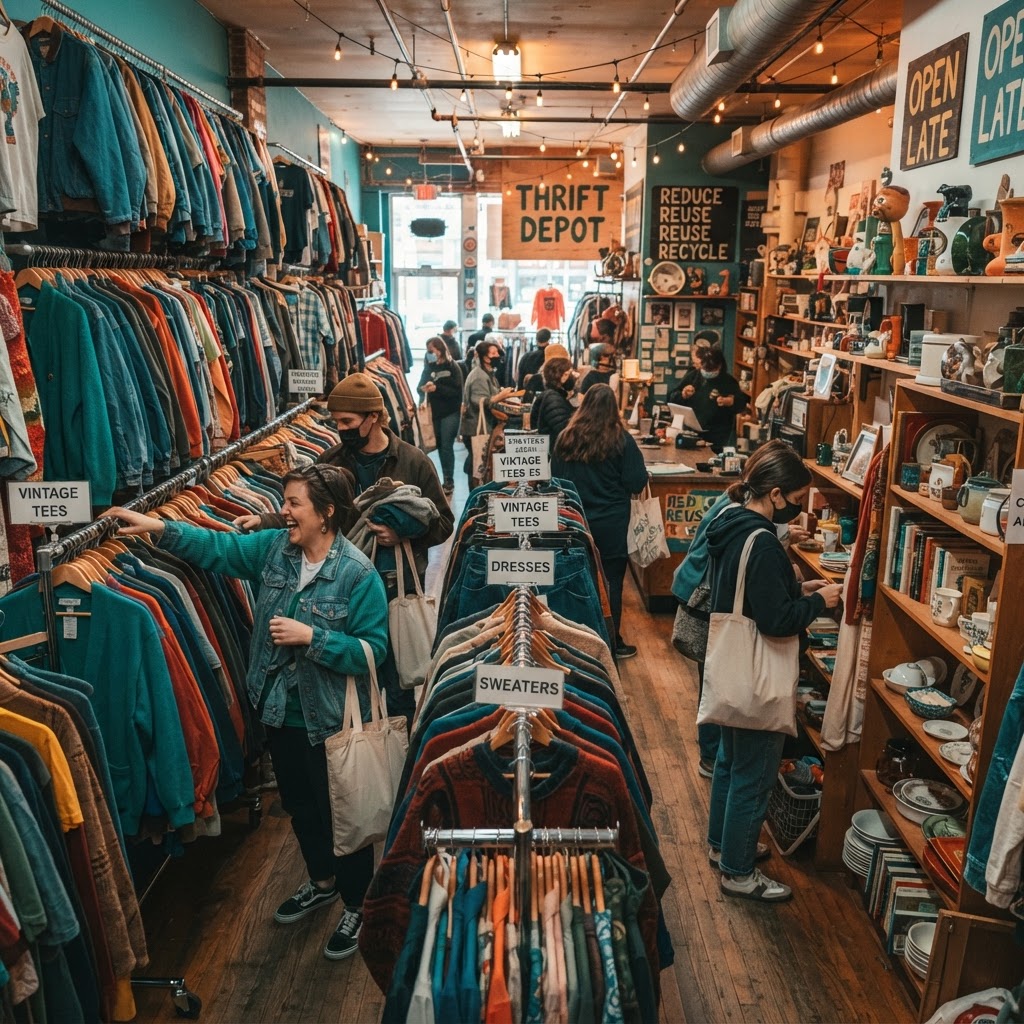
It is August 1, 2026, and if you have stepped into a thrift store anywhere from Halifax to Victoria lately, you have probably noticed something jarring. That slightly faded vintage band tee that would have been $4.99 three years ago? It’s now $35.00 and hanging behind a locked glass case. The sturdy mid-century modern lamp? It’s priced at nearly retail value.
For many of us in the thrifting community, the "sticker shock" has become a regular part of the weekend hunt. But this isn't just standard inflation. According to recent reports from mid-2026, the landscape of secondhand shopping in Canada has undergone a massive technological shift. The culprit? AI-powered predictive pricing.
In this guide, we are diving deep into how the "Thrift Shift" of 2026 is changing the game and how you can still find those legendary treasures without breaking your budget.
The Rise of the Machines: How AI is Pricing Your Donations
Until recently, pricing at major chains like Value Village or Salvation Army was mostly done by human hands using a "best guess" or a basic category sheet. In 2026, that has largely been replaced by computer vision and machine learning.
How It Works
When a donation arrives at the processing center, items are scanned by AI cameras. These systems use image recognition to identify the brand, the material, and even the current "hype" level of a garment. The software then cross-references this data with real-time sold listings on sites like eBay, Poshmark, and Depop.
- The Result: Prices are no longer flat. If the AI detects a specific "Lululemon" logo or a "vintage" tag, the price automatically jumps to match the current market demand.
- The Goal: Major retailers claim this helps them maximize revenue for their charitable missions or shareholders, but for the average Canadian shopper, it feels like the "treasure hunt" is being rigged.
The "Thrift Shift" by the Numbers
A spring 2026 survey by Habitat for Humanity Canada revealed a startling statistic: 83% of Canadians now agree that thrifting makes more economic sense than buying new, given the current cost-of-living pressures. In Calgary, the WorldServe Thrift Store reported such a surge in demand this July that they had to extend their operating hours just to keep up with the crowds.
As more people turn to secondhand options to survive the 2026 economy, the competition for quality goods has reached an all-time high. We are no longer just competing with other hobbyists; we are competing with algorithms designed to squeeze every penny out of a donated item.
From Thrifting to "Asset Management"
For Gen Z and Millennial shoppers, the narrative around clothes has changed. We are no longer just "buying a shirt." In the summer of 2026, thrifting has become a form of asset management.
With the introduction of "Digital Product Passports" in many high-end brands this year, shoppers can scan a QR code on a secondhand item to see its entire history—from the factory to the previous owner. This transparency has made clothes feel like stocks; people buy them with the intent to wear them for a season and then resell them for a profit. This "resale culture" feeds the AI pricing models, creating a loop where prices stay high because everyone knows exactly what every item is worth.
5 Tactics to Outsmart the AI in 2026
If you’re feeling discouraged by the $15 T-shirts at your local shop, don't give up just yet. There are still gaps in the machine. Here is how to keep your thrifting affordable this summer:
1. Hunt for "Inflation-Proof" Materials
AI is great at recognizing logos, but it isn’t always great at feeling fabric quality. While a "Nike" swoosh will trigger a price hike, a high-quality, unbranded 100% cashmere sweater or a heavy linen tunic might fly under the radar. Focus on the "Big Four" of 2026 value:
- Wool
- Silk
- Linen
- Cotton
2. The "Color Tag" Strategy
Most major Canadian thrift stores still use a weekly color-coded discount system to move old inventory. In the age of AI, this is your best friend. Even if an item was initially overpriced by the algorithm, if it sits for three weeks, that 50% off tag brings it back down to a "real" thrift price. Be patient and target the tag of the week.
3. Go "Off-Season" (The August Hack)
Right now, everyone is looking for summer dresses and patio gear. The AI sees that demand and keeps prices high. This is the perfect time to look for heavy winter parkas or boots. Because the algorithm prioritizes "current demand," you can often find deep discounts on out-of-season items that the store is desperate to clear out.
4. Shop the General Racks, Not the "Boutique"
Many stores now have a "Curated" or "Boutique" section where the AI-picked winners are displayed. Avoid these like the plague. These sections are specifically designed for people who have more money than time. The real deals are still buried in the general racks where a human worker might have misfiled a high-value item or where the AI simply missed a hidden designer label.
5. Pivot Back to the Yard Sale
This is perhaps the most important tip for 2026. While big-box thrift stores are leaning into AI, your neighbor down the street in Moncton or Edmonton is still just trying to clear out their garage. Yard sales and garage sales remain the last frontier of truly manual pricing. At a yard sale, you are negotiating with a person, not a database. You can still find a $2 box of books or a $10 bike because the goal is "get this out of my sight," not "maximize the asset value."
The Future of Thrifting in Canada
As we look toward the rest of 2026, the trend of high-tech thrifting isn't going anywhere. We are even seeing the rise of "agentic commerce," where AI assistants negotiate prices on behalf of buyers on apps like Poshmark.
But at its heart, thrifting is about the connection between people and the stories behind the objects. Whether you’re scanning the racks at a boutique in Montreal or digging through a bin at a yard sale in rural Ontario, the thrill of the hunt remains. The machines might be getting smarter, but a dedicated thrifter with a sharp eye for quality will always come out on top.
Happy hunting, Canada! Stay thrifty.
Quick Checklist for Your Next Trip:
- Check the Tag: Is it the 50% off color of the week?
- Feel the Fabric: Is it a natural fiber that the AI might have missed?
- Inspect the Hardware: High-quality zippers and buttons are often signs of an expensive brand that wasn't properly labeled.
- Check for the QR Code: If it has a Digital Product Passport, scan it to see if the resale value justifies the price.
Ready to find your own treasure?
Browse active yard sales near you on the interactive map.
Browse yard sales near you